


Business shirts work hardest when they are worn repeatedly, washed often and expected to remain presentable from the morning commute through to evening appointments. Professionals ordering men tailored business shirts in Bangkok should think beyond one perfect garment and build a practical rotation that balances fit, durability, climate and ease of care.
Plan a Working Week, Not a Single Outfit
A useful shirt collection should cover the different levels of formality that arise during an ordinary week.
White and pale blue shirts handle formal meetings, presentations and traditional office dress codes. Fine stripes, small checks and muted colours add variety for less formal days while still working beneath a jacket.
The number required depends on laundry habits and travel. Someone who wears shirts five days a week may need seven to ten dependable options so that no single garment is washed excessively. Frequent travellers may benefit from fabrics that recover well after packing and can be pressed easily.
It is worth avoiding too many nearly identical shirts. Small differences in collar, texture and colour make the wardrobe more adaptable without creating difficulty when pairing with suits and ties.
Use Different Fabrics for Different Demands
No single fabric is ideal for every working day.
Poplin is smooth and formal but can show creases more readily. Twill offers greater texture and often drapes well after several hours of wear. Oxford cloth is robust and comfortable, although its casual appearance may not suit the most formal offices.
In warm weather, lightweight cotton provides breathability, but the cloth should not be so fine that it becomes transparent. A small amount of stretch can improve movement for men who drive, travel or work at a desk for long periods.
Easy-care finishes may reduce ironing time, but comfort and breathability should still be assessed. Some highly treated fabrics can feel less natural against the skin.
The collection can include heavier cloth for air-conditioned offices or cooler seasons and lighter options for outdoor travel and warmer days.
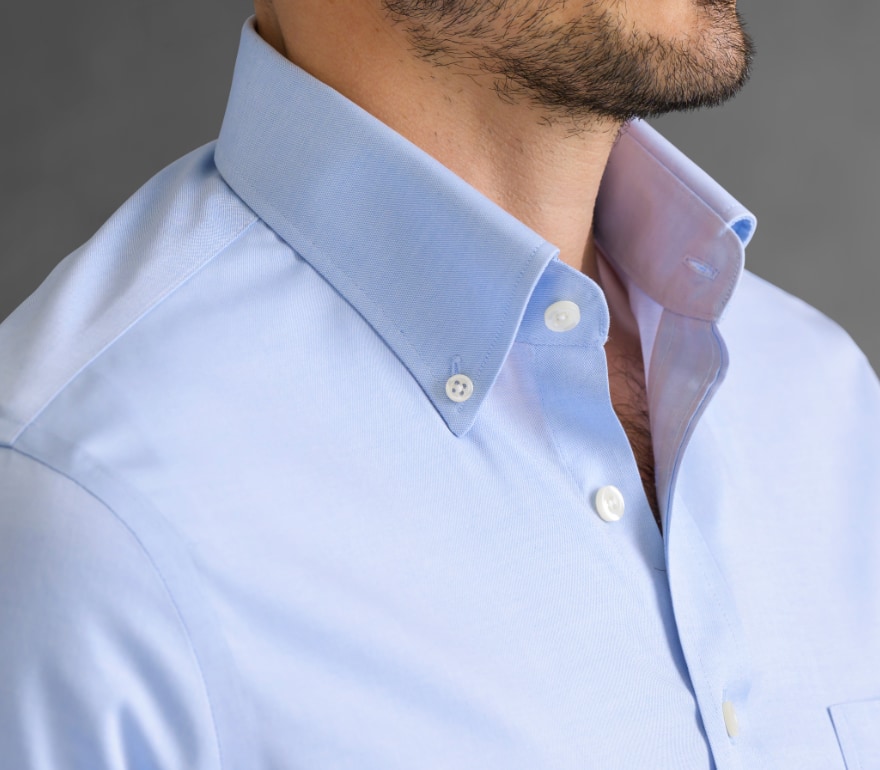
Standardise the Fit, Then Adjust by Style
Once a reliable base pattern has been established, future shirts can be made more efficiently. However, different fabrics and intended uses may require small adjustments.
A formal shirt worn under a fitted suit can have a cleaner body line. A shirt intended to be worn without a jacket may need slightly more ease and a hem shape that looks finished when untucked.
Collar sizes should remain comfortable throughout the day, especially when worn with a tie. Cuffs need enough room for a watch but should not slide over the hand.
The tailor should check whether the wearer’s posture or shoulders create recurring issues. A pattern that accounts for these characteristics is more valuable than simply repeating chest and neck measurements.
Shirts should be tested while sitting, reaching and typing. A garment that fits only in a standing pose will not support a full working day.
Extend the Life of the Collection
Good shirts last longer when they are rotated and cared for appropriately. Wearing the same favourites repeatedly causes collars and cuffs to deteriorate faster, even when the rest of the garment remains in good condition.
Stains should be treated promptly, particularly around the collar. Washing at unnecessarily high temperatures can weaken fibres and affect colour. Shirts should be removed from the machine soon after the cycle to reduce deep creasing.
Hangers should support the shoulders without stretching them. When travelling, shirts can be folded with care or packed around flatter items to reduce pressure lines.
Replacement collars and cuffs may be possible on some well-made shirts, although the fabric body must still be in suitable condition.
A dependable business wardrobe is created through consistency rather than novelty. With a considered mix of fabrics, colours and collar styles, tailored shirts can simplify dressing while remaining appropriate across a wide range of professional settings